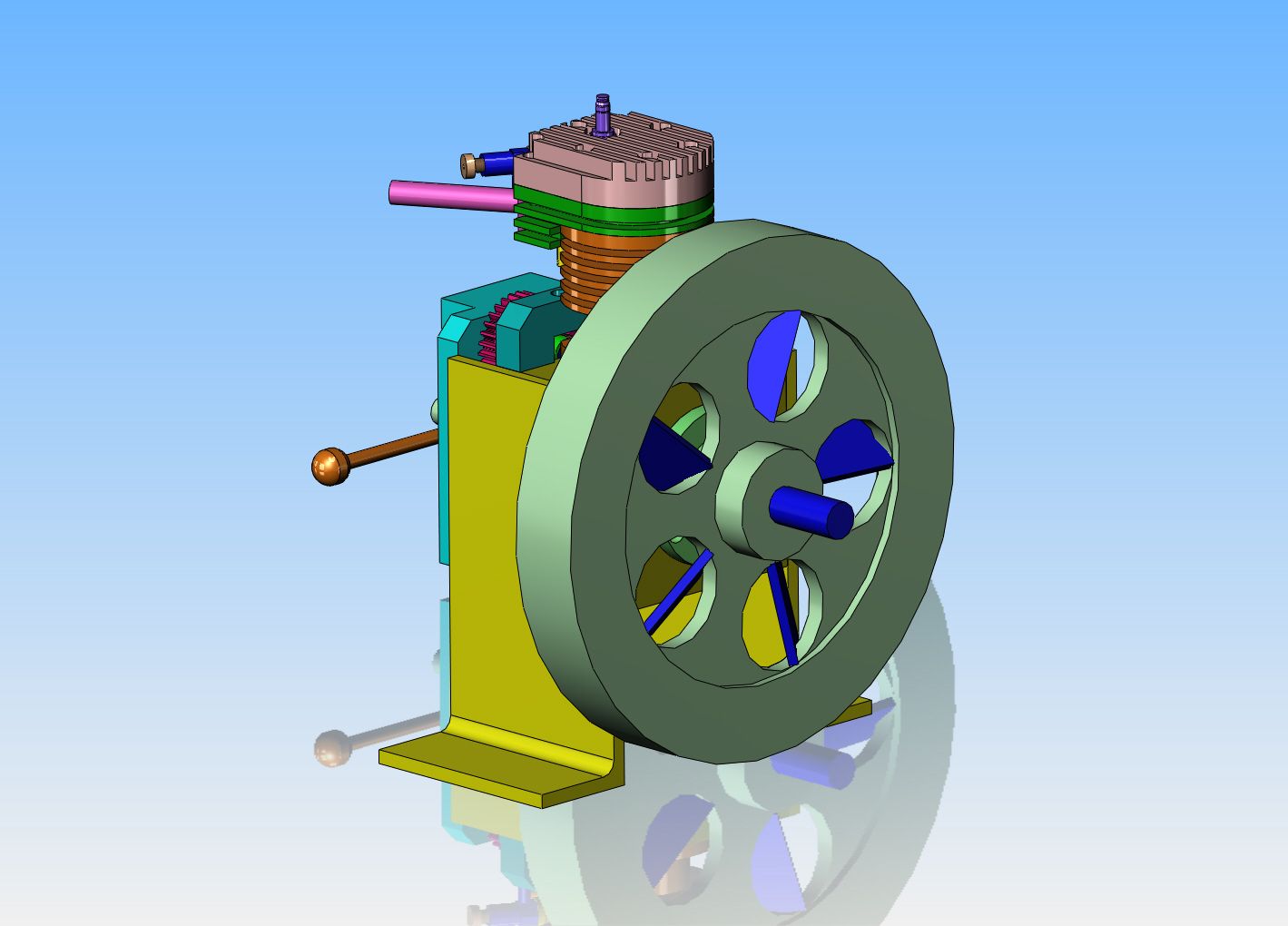
This is the point at which things begin to get a bit----goofy? The engine needs a flywheel. Past experience has proven to me beyond a doubt that the larger diameter a flywheel is, the better the engine will run and idle. Throttle response won't be as quick, because that's a lot of mass to move, but if fast throttle response isn't vitally important, then a large diameter flywheel is the way to go.
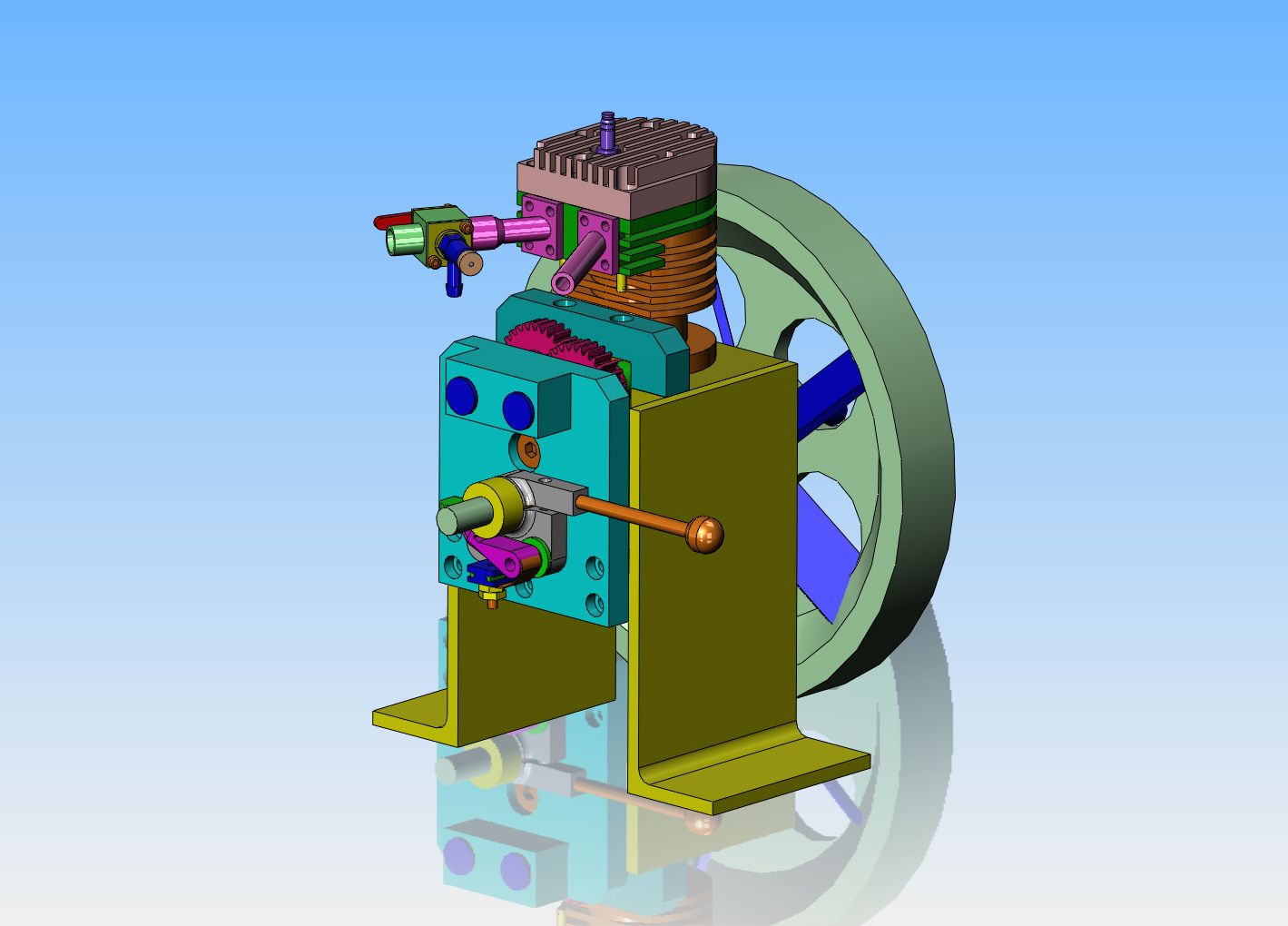
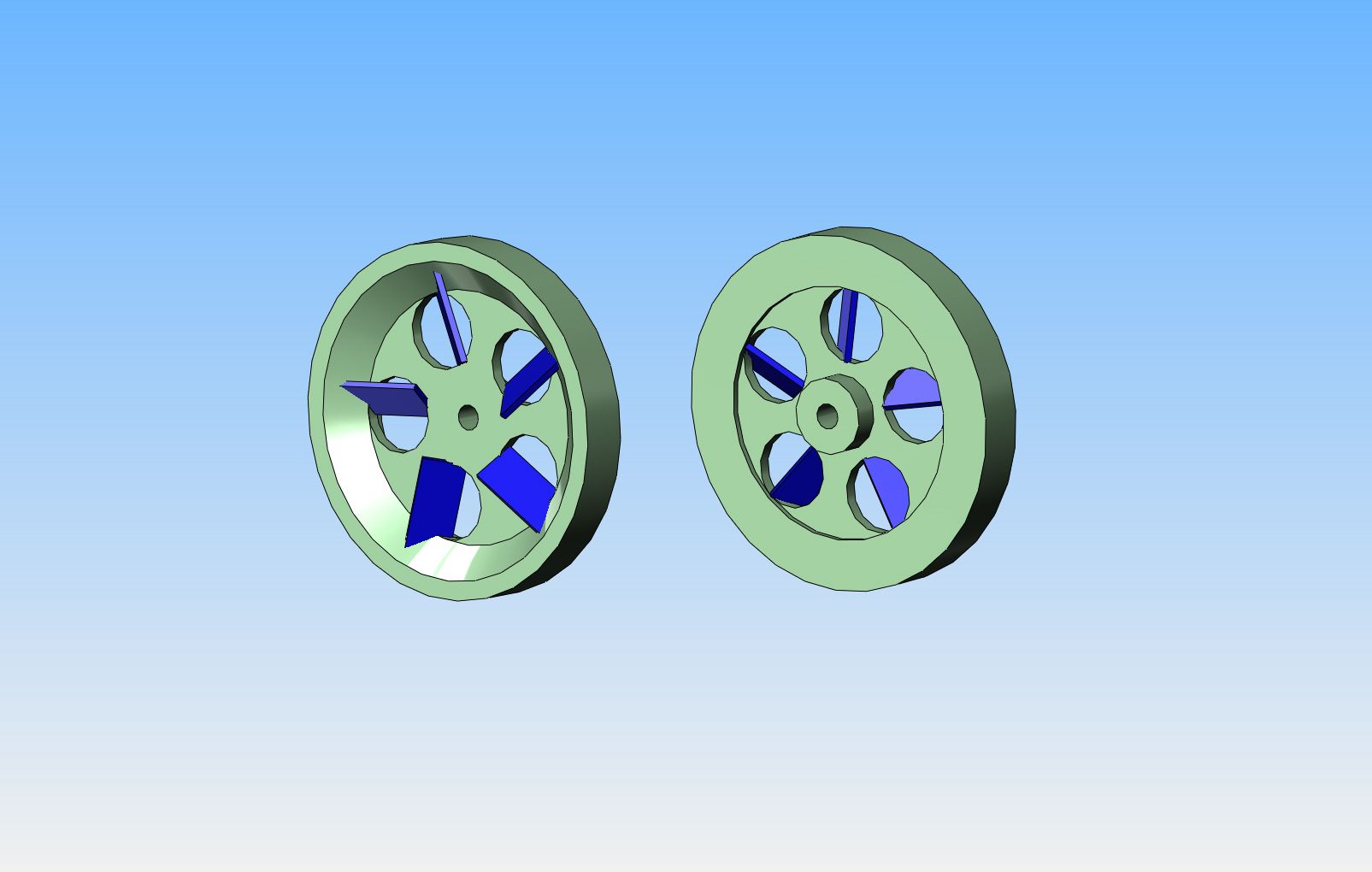
The flywheel shown is 7" diameter, which is about 1" too much in my opinion, to keep the proportions reasonable.----So----Why make the flywheel so big?--Because a second factor I have proven to myself, is that without some kind of airflow over the fins, the engine will rapidly overheat. All you guys who build these small engines with a propeller, like for instance the Nemett series by Malcolm Stride will know how much the air from the prop will cool the engines. I don't like propellers.---Having once, in my jaded past, stuck a finger into a (thankfully small) propeller on a model gas airplane, I HATE propellers. So---What to do?--I need a flywheel anyways, it has to be made from steel (can't afford brass) and I can weld steel. ----By making the flywheel 1" larger in diameter, and drilling 5 holes through the web, I can then make up 5 blades of .125" thick steel and weld them into the holes at a 45 degree angle. This will create lots of air movement, yet the flywheel will have a smooth outer rim in case some poor fool like me inadvertantly touches it. It will work. In fact, I think it will work very well. The only downside is that it makes the engine look "goofy".
 Side Valve i.c. engine from Bar stock
 Side Valve i.c. engine from Bar stock
 Side Valve i.c. engine from Bar stock


